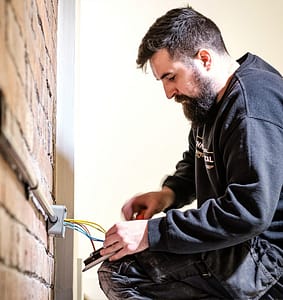
Portable appliance testing is something I get up to a lot as an electrician. Over 14 years in the trade, and I’ve conducted these nifty electrical safety checks for people of all walks of life: landlords, lettings agencies, cafes, office buildings, and even clergy. But one thing they all have in common is a proper understanding of their compliance obligations.
If that’s something you’re still wobbly on, whether you’re a business owner, landlord, or site manager, not to fear! In this zero-fluff guide, I’ll explain what portable appliance testing is, what exactly it entails, the requirements for a good job, and what to expect from the process.
No time to lose – let’s get cracking!
Skip to:
- What is Portable Appliance Testing?
- The Importance of PAT Testing for Safety & Compliance
- Who Needs Portable Appliance Testing & When?
- How the Testing Process Works
- Finding a Top Electrician
- Conclusion
So, What is Portable Appliance Testing?
For folks unacquainted with portable appliance testing, or PAT as it’s also known, it’s simply a subcategory of electrical testing that targets the electrical appliances you can unplug and move about in your home or workplace.
Through a series of visual inspections and electrical tests using dedicated PAT testing kit, an electrician can quickly determine whether the portable appliances in question are running correctly and are safe to use.
Anyone can conduct a brief user check (provided they are appropriately trained and have the right checklist at their disposal), but in many cases, it’s preferable to get an expert on board.
Here, I’m thinking about scenarios involving appliances that rack up wear and tear rapidly through frequent everyday use, high-powered machinery, or items that, when broken, throw a serious spanner into the works for your business.
What Counts as a Portable Appliance?
I find that there’s still a lot of confusion around the term ‘portable appliance’. It feels like a bit of a trick question, because it’s that simple: an appliance you can unplug and move around. But what exactly does that cover? Here’s a non-exhaustive list to give you a better idea:
- Kettles, microwaves, toasters and coffee machines in staff rooms
- Cleaning equipment like hoovers and electric floor cleaners
- Hand dryers, portable heaters and fans
- Lamps, including heat lamps
- Power tools, gardening equipment and portable machinery
- Office equipment, like PCs, monitors, printers, extension leads and plug boards.
Yep, you guessed it – each item bears its own level of risk, requiring different levels of monitoring and inspection. In fact, Health and Safety England recognises that some low-risk environments might not even need formal testing. But as they say, better safe than sorry.
Why PAT Testing is a Big Deal: Safety & Compliance
Speaking of ‘safe’, why is portable appliance testing so important? Well, short and sweet, it acts as a critical buffer against the consequences of electrical risk and non-compliance, for both businesses and landlords. With electrical faults contributing to a significant share of business and domestic fires (25.9%), the importance of regular inspection is hard to overstate.
For workplaces, the responsibility is clearly defined: ensuring that electrical equipment is maintained in a safe condition falls under the remit of The Electricity at Work Regulations 1989. An obligation that doesn’t scale down with business size; whether you’re a team of five or five hundred, periodic inspection and testing remain essential.
In the private rental sector, expectations are also rising. Under the newly tightened up Renter’s Rights Bill, landlords must meet a taller duty of care, which includes keeping electricals in good condition.
In both instances, skimping on the maintenance only leads to a liability that snowballs with every untested device, risking your insurance policy or exposure to fines and prosecution, at worst.
Who Needs Portable Appliance Testing & When?
While, yes, landlords and businesses are obliged to maintain proper electrical safety standards, portable appliance testing itself isn’t a specific legal requirement. This understandably leads to a lot of confusion as to who it’s necessary for and when.
In my experience, any UK employer using portable electrical equipment should consider integrating PAT testing into their broader health and safety policy, given the risks I explained above. Thus, hospitality venues, healthcare premises, construction sites, schools, warehouses, offices and care environments all stand to gain.
As for the when, here are some scenarios that might call for greater PAT attention:
- Portable appliances are frequently moved, plugged in and unplugged
- Electrical devices share numerous users or are used consistently throughout the day
- They’re used in kitchens, workshops, plant rooms or outdoor areas
- Electrical items are more exposed to wear, heat, moisture, dust or impact
- They’re essential to daily operations or high-risk for the user (e.g., a power tool with lots of welly)
- Visibly, it looks like your appliances have seen better days, but they still work
How the Testing Process Works + What to Expect
Like many other electrical safety tests, the PAT process can be whittled down into a few simple steps. Here’s exactly how they work.
1. Prep & Appliance Identification
First, the PAT tester will identify which appliances are in need of testing, if they haven’t received a list from the client already. They’ll check or assign each item its unique ID number, along with the equipment classification (Class I, Class II, Class III), which determines the type of tests that need to be completed. For safety, a preliminary risk assessment should be carried out.
2. Visual Inspection
Perhaps the most important step, because it catches the majority of faults, the next item on the agenda is a visual inspection. Here, the inspector will look for:
- Evidence of botched repairs (I often see tape keeping leads together, or people who have made a dog’s dinner of their plug wiring)
- Damaged plugs, so things like cracked casings and bent pins
- Frayed, trapped, cut or exposed cables that pose health and safety hazards
- Signs of overheating or burning, which point to fire risks
- Loose connections, parts or screws
- Equipment stored in dusty or moist environments
- Incorrect fuses
If they spot any of these, that means your appliance isn’t safe to use; it ought to be repaired or replaced entirely to prevent electrical accidents.
3. Practical Testing
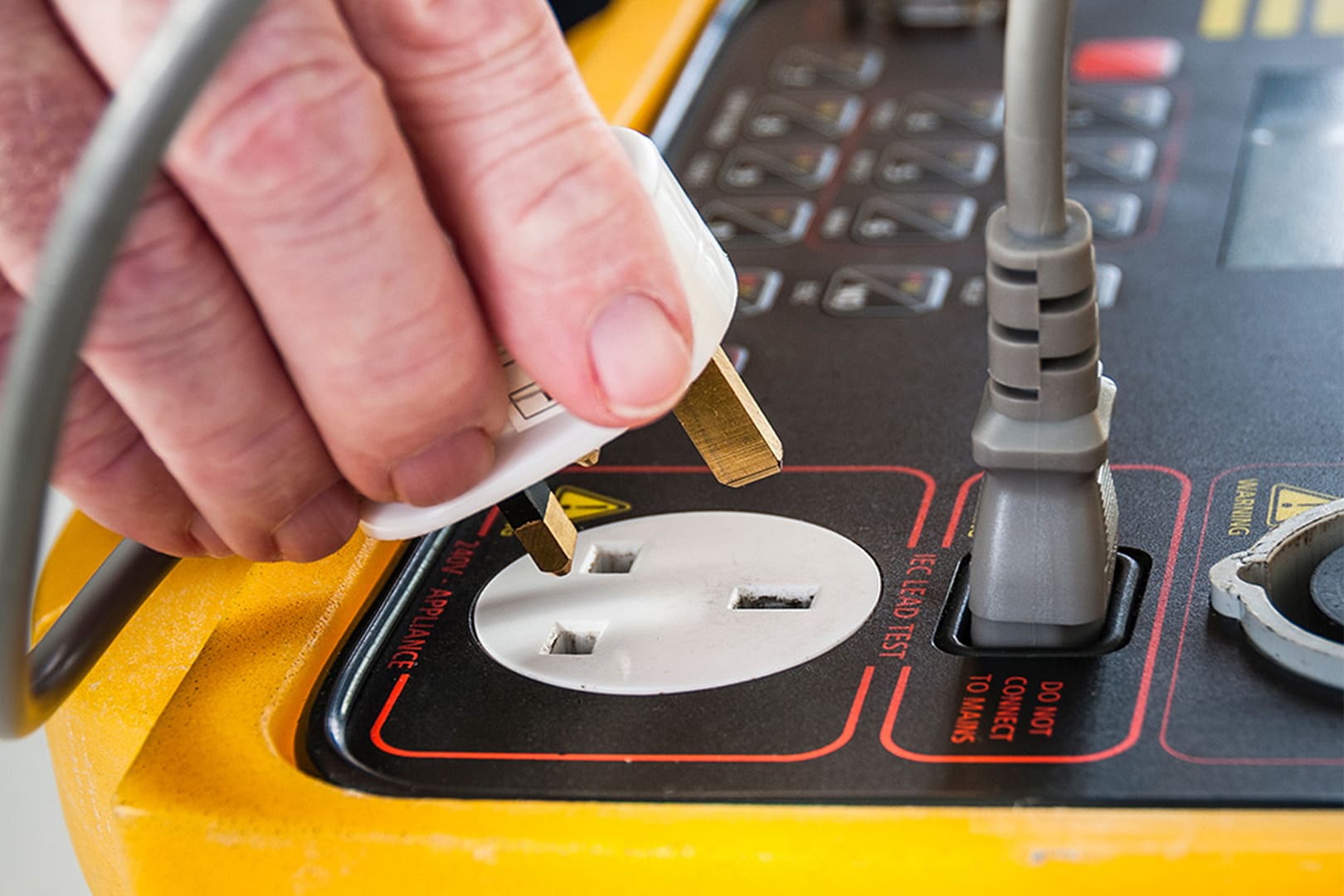
When there are no signs of visible damage, the tester can move on to a series of electrical checks. Operating a portable appliance tester, they will perform tests for earth continuity, insulation resistance, polarity and functional safety.
4. Interpreting Results
Weighing up the recorded figures against the established threshold values, the PAT tester will then determine whether the device has ‘passed’ or ‘failed’.
A ‘pass’ signifies that it meets statutory requirements, securing it a ‘passed’ sticker displaying the date of the inspection and when the next is due. A ‘fail’, however, means that the appliance is not fit for use and should be removed immediately.
5. Record-Keeping
Wrapping up the process is the documentation. Here, the qualified tester will produce a report containing an inventory of all the devices evaluated and the full set of test results for each. It should clearly outline, in lay terms, which items failed and why.
To see what all of that looks like IRL, check out a recent vlog where I carried out some electrical tests for a church in the middle of Tadcaster.
Finding a Top Electrician (Like Finney Electrical) to Do the Job
I hate to be the bearer of bad news, but rogue electricians do exist. These unscrupulous traders will either dawdle to rack up time on the clock (time = expense added to your bill), zip through the tests at lightning speed, thereby giving you subpar service, or might pressure you into unnecessary remedial work.
To avoid this deadly trio, look out for electricians who…
- Are honest and transparent about their prices upfront: average PAT costs sit around £1 to £1.25 per item or £40-60 per hour; anything wildly different should be taken as a red flag.
- Do the work within a reasonable timeframe: portable appliance testing usually takes 2-5 minutes per item, depending on how accessible they are.
- Demonstrate real experience through qualifications and training: For example, at Finney Electrical, we hold Passivhaus, ERFIT, and City & Guild certifications, among others.
- Have reviews backing up claims of quality: Check customer opinions through reviews and testimonials on trusted platforms, like Checkatrade or Which?’s Trusted Traders.
Also, don’t forget to compare quotes! I’d recommend getting at least three, so you find a local contractor who ticks all of the boxes.
Conclusion: Compliance that Pays Off in the Long Run
So, that concludes this guide on portable appliance testing. I hope you found it informative and helpful, not the snooze fest you might’ve originally anticipated.
Whatever the case, your main takeaway should be this: portable appliance testing, although not the most exciting piece of admin, is an essential buffer against electrical safety risks and mounting liability.
While not strictly mandated under UK law, as an employer or landlord, it’s your duty to instil minimum standards for electrical safety; a PAT test is a simple and cost-effective way to do just that. But, really, you can’t put a price on peace of mind.
If any lingering questions are still nagging at you, you’re welcome to drop me a line. A member of the Finney Electrical crew will walk you through the process – zero jargon and pushy salespeople. Alternatively, if you’re ready to book your portable appliance test today, we can get the ball rolling with an instant quote.